Have Some Popcorn: The Belgian Creator Behind One of YouTube’s Biggest Food-Story Channels
In eighteen months, Deni’s PopcornTheory went from a 37-second explainer about fake wasabi to 335 shorts, 187,000 subscribers and more than 685 million views. This September, the same creator opened a second front on Instagram, with a cast that includes a giant white cat and a gorilla in a red bandana.
On March 8, 2025, a new YouTube channel published its first short. It ran 37 seconds and explained that most of the wasabi served in restaurants is horseradish, mustard and green food colouring. It collected about 21,000 views. The channel’s description was three words long, and it still is: “have some popcorn.”
Eighteen months later, PopcornTheory has posted 335 shorts, gathered 187,000 subscribers and passed 685 million views, according to YouTube’s public channel statistics. Seventy-three of those shorts have crossed one million views. The biggest, a 33-second retelling of the 2012 Mountain Dew naming contest that the internet hijacked, has been watched 48.6 million times.
The person behind the channel is Deni, a creator based in Belgium who publishes under the PopcornTheory name on YouTube and as @deni_nzt on Instagram. Both accounts carry verification badges. Neither carries much else: the Instagram bio is empty, the YouTube “about” page is the three-word slogan, and there is no link in either direction. The work is expected to do the talking.
A story in thirty seconds
What the work does is tell stories. Not recipes, not reviews, not taste tests. PopcornTheory shorts take a piece of food-world lore, usually involving a brand, and tell it the way a friend would across a table: the setup, the turn, the punchline, and out.
The house style is easiest to see in the channel’s biggest hits. “In 2012, Mountain Dew launched an online contest asking fans to name their new apple flavour,” one begins, before explaining how the vote was flooded by trolls. “In 2021, McDonald’s actually started a sign war with Dairy Queen,” begins another, which then reads out the escalating roadside signs on both sides; it has 47 million views. A third opens with a French couple trying to register the name Nutella for their daughter in 2013, and ends with a judge renaming the girl Ella. That one has 31 million.
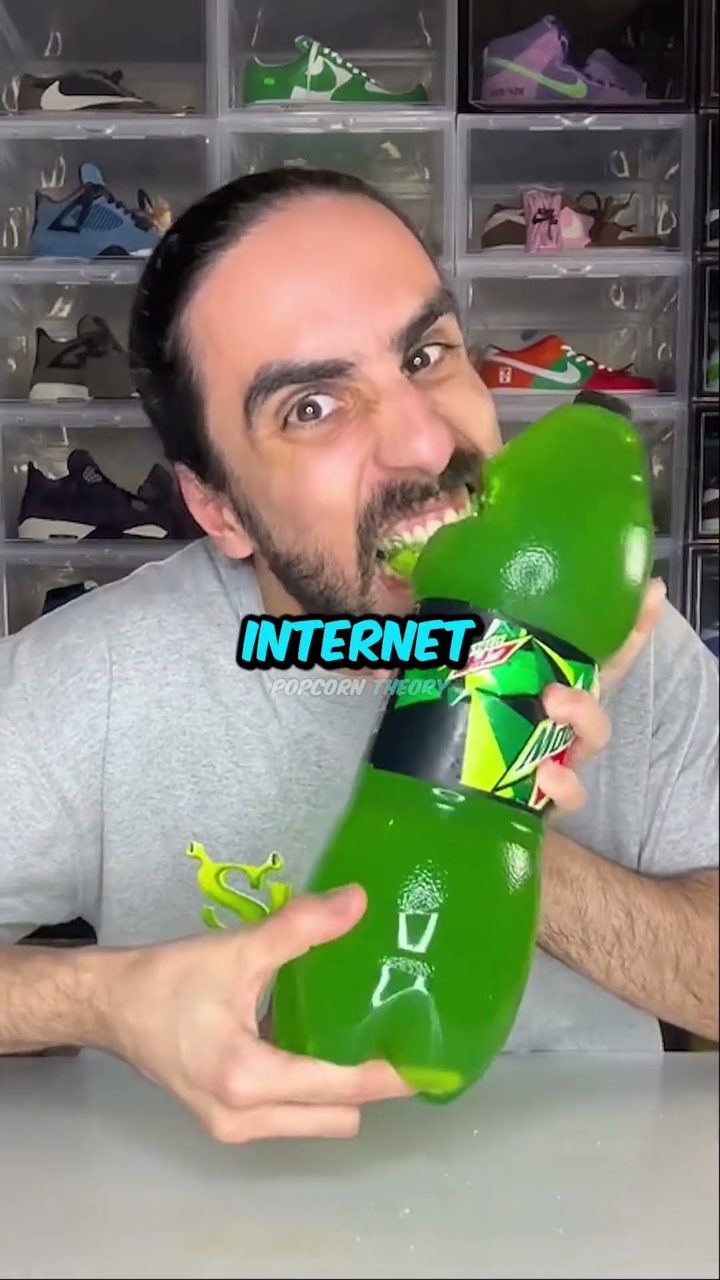
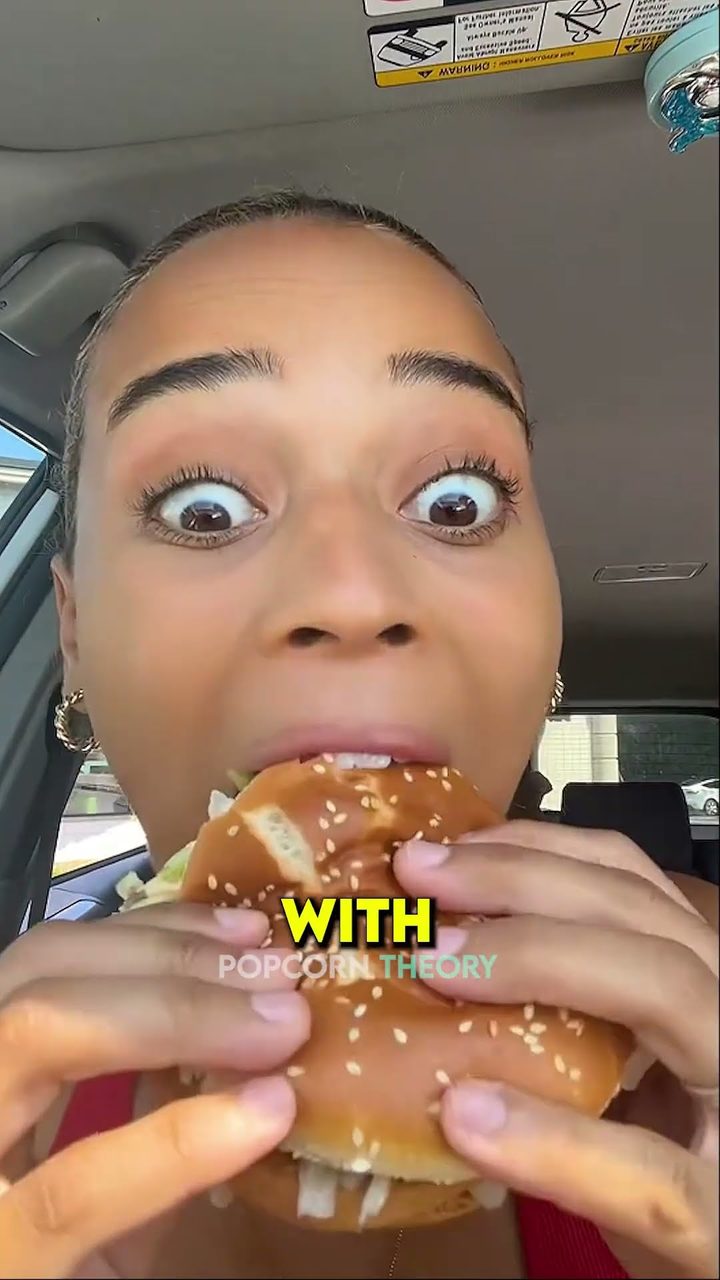
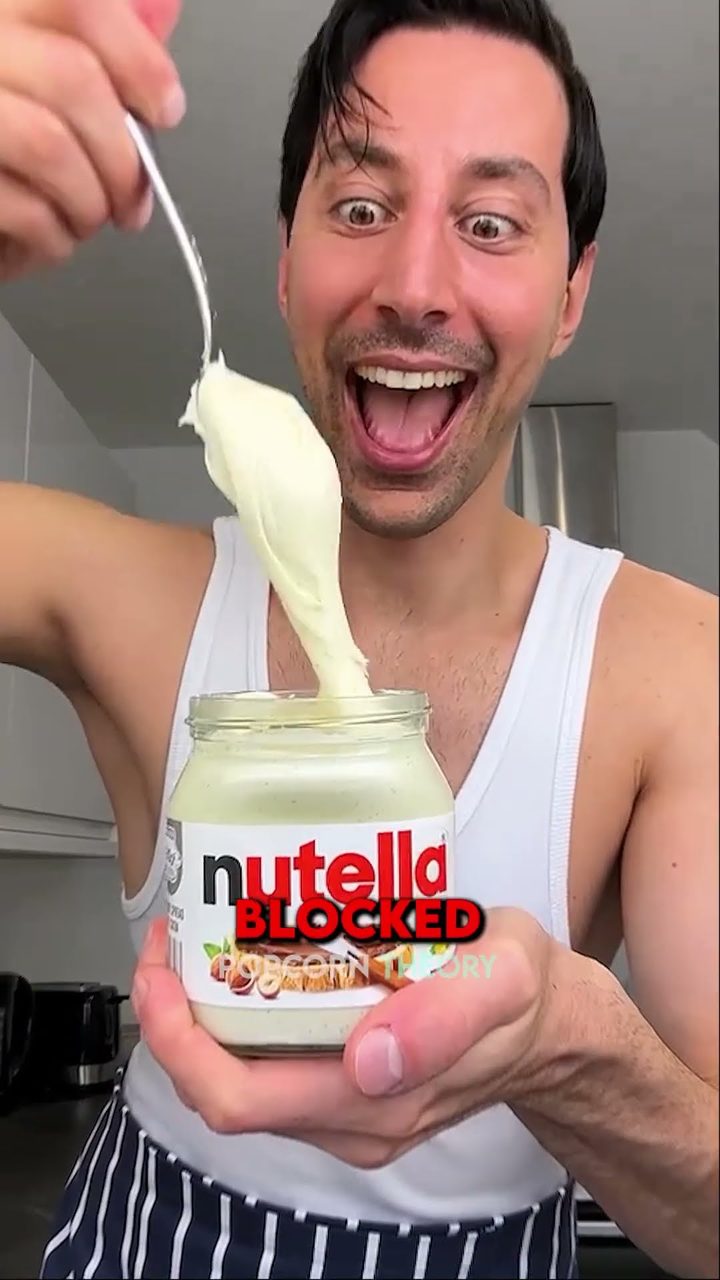
The numbers behind the style are unusually consistent. The median PopcornTheory short runs 32 seconds, and four in five run 40 seconds or less. Titles do the selling: 83 of the 335 carry a skull emoji, and the most-viewed ones tend to be a stunt in quotation marks, such as “Live In IKEA For 30 Days For UNLIMITED Furniture” or “Stay In Walmart Unnoticed And Win $100,000”. Descriptions are almost an afterthought; only 35 of the 335 uploads have one. Everything the viewer needs is in the first sentence.
Visually, the 2025 shorts were built from existing clips and photos, with single yellow keywords stamped across the frame in time with the narration, a red arrow pointing at whatever matters, and a small POPCORN THEORY watermark. A narrator carries the story. There was no host on screen, and for most of the first year there did not need to be.
The year the channel took off
The growth curve was not smooth. It arrived in bursts, and the bursts were big.
The first came in May 2025, two months in. “DON’T CLICK THE SOUND!”, a 47-second story about a University of Alabama student who turned Olive Garden’s unlimited breadsticks into a dorm delivery business, reached 16.6 million views. Two days later the Mountain Dew short went up and became the channel’s all-time leader. May alone brought 98 million views to a channel that had managed about ten million in March and April combined.
July brought the Nutella baby (31.1 million). August brought the man who tattooed the Chipotle logo on his leg for free burritos for life and was banned three months later for coming every day (28.2 million). September brought the claim, made in one short, that 88 percent of people pronounce Nutella wrong (24.9 million) and the Subway tuna lawsuit (16 million).
Then came October 2025, the month the channel has never matched since. Thirty shorts went up, nineteen of them passed a million views, and together they drew 223 million views in thirty-one days. The McDonald’s and Dairy Queen sign war led, with the IKEA showroom stunt (25.5 million), the PlayStation hundred-hour gaming challenge (20.1 million), the Walmart hide-and-seek (19.2 million) and a TikToker’s “deconstructed salad” (19.1 million) close behind. November added the story of why Dunkin’ throws away its unsold doughnuts (19.3 million); December added the Chinese bakeries’ impossible tiramisu challenge (13.6 million) and the Wendy’s “cube” that never existed but was officially banned anyway (7.6 million).
By the turn of the year, the channel had a recognisable beat: fast food, chocolate spreads, promotional stunts, sign wars, secret menus, and the moment a corporation meets the internet. January 2026 delivered two more in that vein, the man who ate pizza backwards for five years hoping for a Tesla (14.4 million) and the collapse of the Stanley cup craze (9.1 million).
The slogan, it turns out, was never about food. Have some popcorn. Something is about to happen.
The 2026 reset
Any channel that publishes most days, as PopcornTheory did through 2025, eventually has to decide whether to keep doing the same thing. Through 2026 the answer has been no.
The subjects widened first. A run of Japan shorts in April and May (the channel has now made 16 of them) looked at bakeries, packaging laws and vending inventions. In late June, with the World Cup under way in North America, the channel turned to football for three weeks: a story about restaurants adding a “FIFA” surcharge to every bill (2.7 million views), a breakdown of whether Argentina was getting favourable refereeing (2.4 million), a Haaland look-alike contest that ended with the winner watching the real Haaland lose (2.1 million), and a fan whose every team lost (1.2 million). In the same fortnight, a short about European portion sizes reached 2.7 million and one comparing American and Chinese healthcare bills reached 1.7 million. Between June 25 and July 20, eighteen shorts drew 14.9 million views, and seven of them crossed a million.
The format changed too. The newer shorts open with a spoken “So,” rather than a date, and by the summer the channel had put a presenter on camera: a host at a microphone, in front of a pink studio backdrop, talking straight to the viewer between the clips. The narration got looser and more conversational, closer to a friend reacting than a documentary voice.
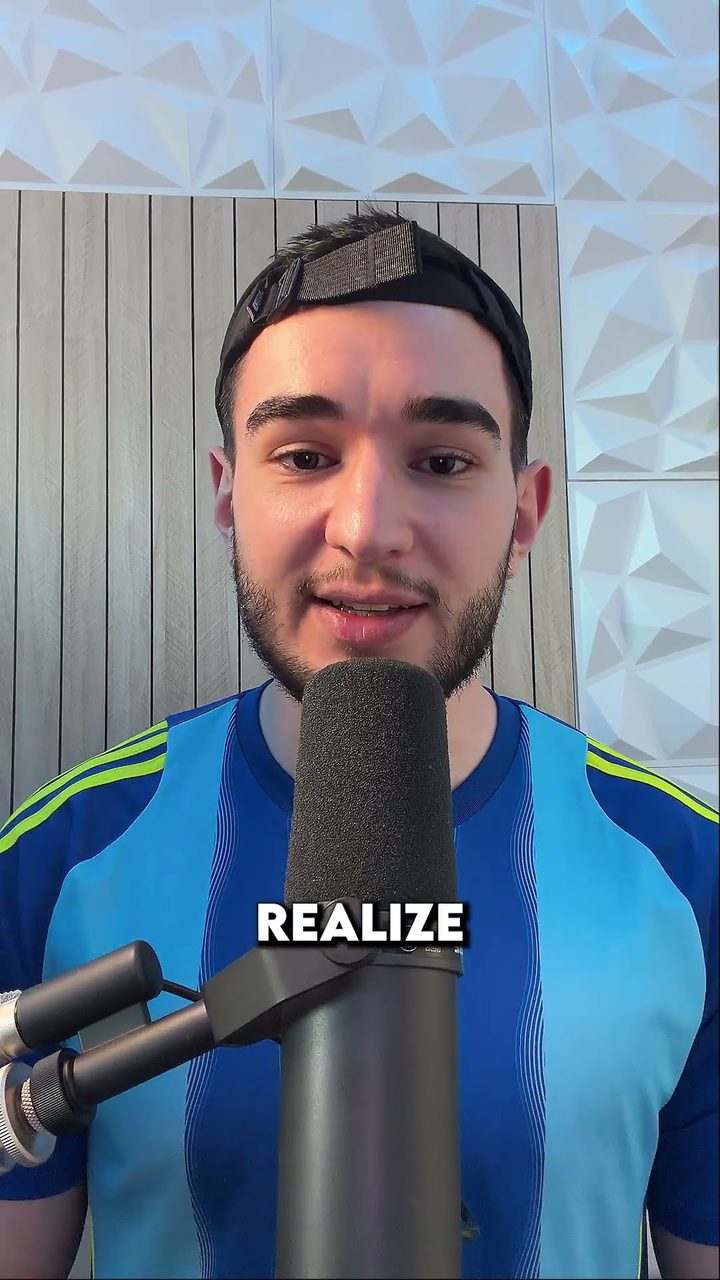
And the emotional range widened. Alongside the skulls, a second emoji has crept into the titles: a mending heart. “She realized he was talking about HER”, a short about parents filming their children while secretly describing them as their favourite person, reached 4.05 million views in August and became the channel’s biggest short since January. “Worst First Day Of School”, about a four-year-old who came home in tears and then had “the best day ever” on day two, opened September. The channel that built its audience on corporate mischief has started telling stories that end with someone being kind.
The second act on Instagram
While the YouTube channel was recalibrating, Deni was building something different on Instagram.
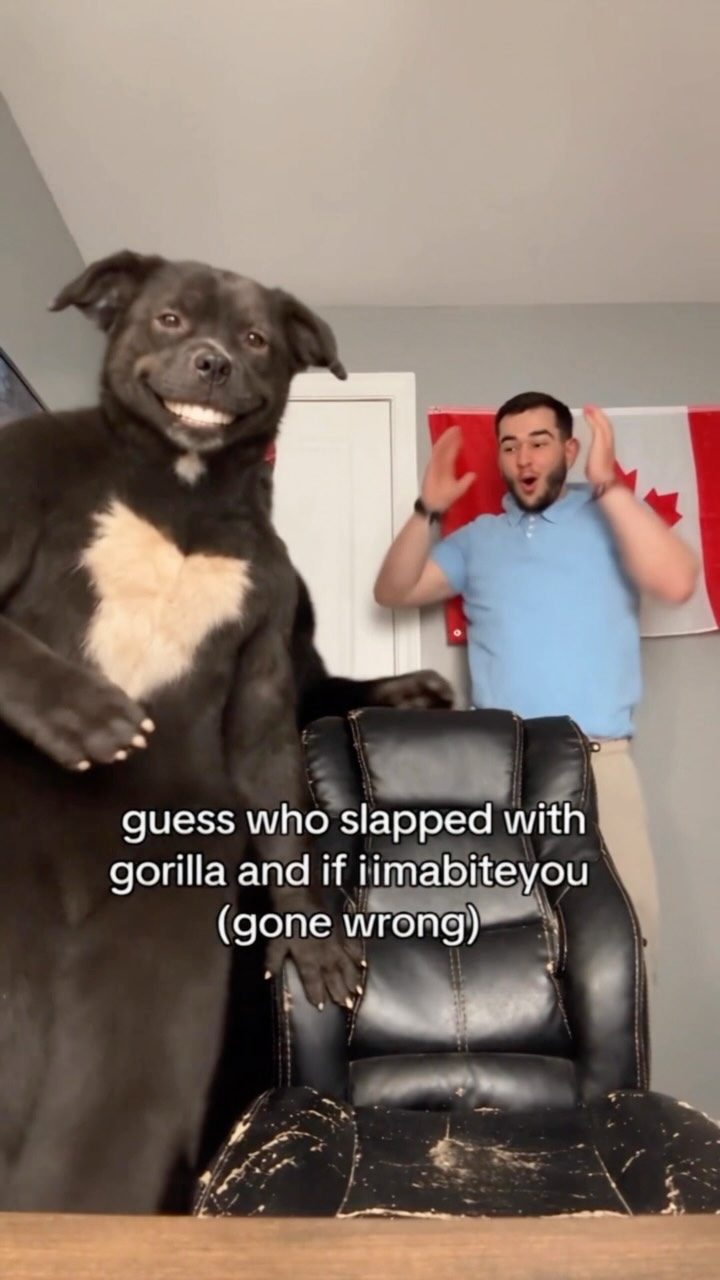
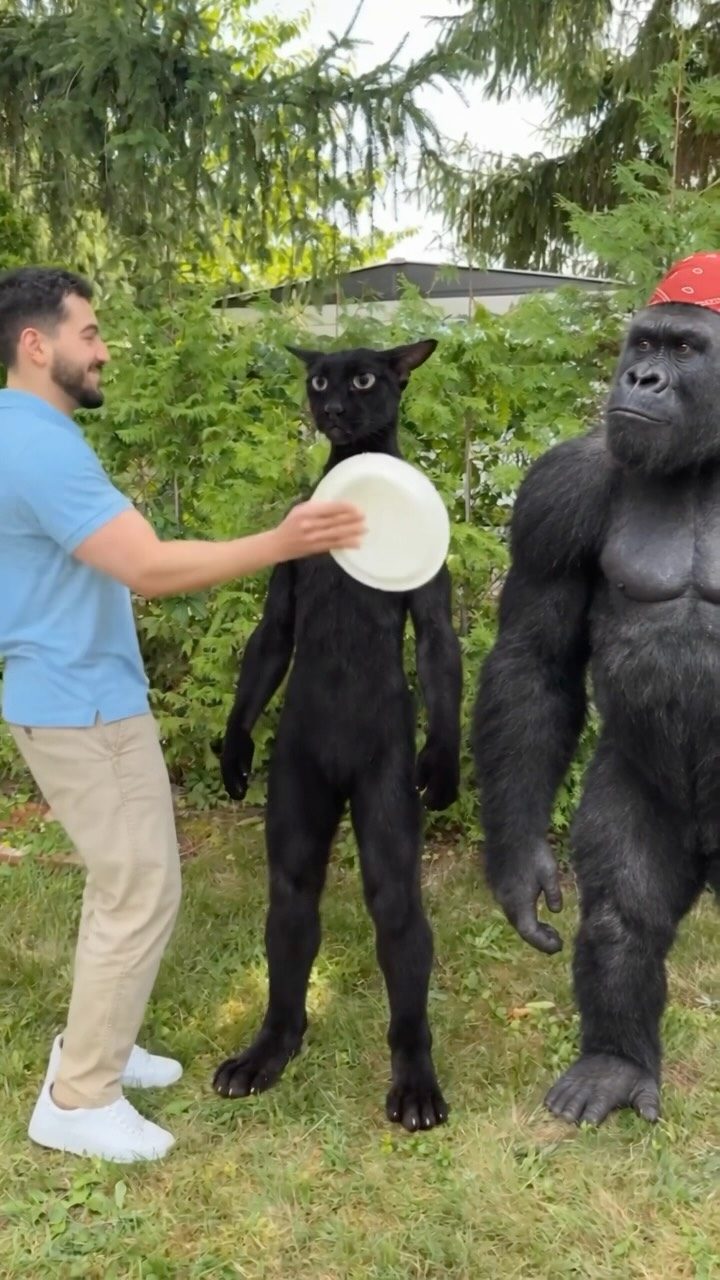
The @deni_nzt account has 30 posts and about 10,600 followers, a fraction of the YouTube audience. Its reach is not a fraction. Between September 16 and September 25, 2026, the account posted seventeen reels, and they have been watched 10.7 million times and liked 1.2 million times. Eleven of the seventeen have passed 100,000 views. Four have passed a million. The pinned reel, captioned “guess who slapped”, stands at 2.98 million views and 301,000 likes.
The reels are nothing like the YouTube shorts. There is no narrator and no archive footage. Deni is on camera, often in a light blue polo, playing the straight man to a cast of oversized, AI-generated creature characters: a giant white cat with an unsettling human grin, a black dog with a bright white smile, a sleek black panther that stands like a person, and a gorilla in a red bandana. The captions give the regulars names: teethcat, ifyougrabme, larry.
The formats are playground games with the stakes turned up. A slap challenge, now in its third part. A food challenge. Pass the slime. Rock, paper, scissors, smash. “My first day as a tattoo artist”, which shows the black dog inking Deni’s arm, has 1.4 million views under the caption “im never coming back again”. “Me and my friend in class” (813,000 views) takes the act to school. The comedy is physical and silent, built on reaction shots, and it travels without translation, which is part of why a ten-day run of posts can reach numbers most accounts never see.
What ties it together
Two accounts, two formats, two audiences that barely overlap. What they share is the instinct that runs through everything Deni publishes: a setup you cannot scroll past, and a payoff that arrives before you have decided whether to stay.
On YouTube that instinct produced a channel that went from a fake-wasabi explainer to 685 million views in eighteen months, then had the nerve to change its own formula. On Instagram it produced a cast of characters and a run of numbers that most accounts with a hundred times the followers would envy.
The slogan, it turns out, was never about food. Have some popcorn. Something is about to happen.